
The LBW rule explained in plain words: the five conditions for leg before wicket, where the ball can pitch and hit, when a batter is never out and how DRS checks LBW.
LBW stands for leg before wicket. The LBW rule stops batters from simply using their pads to keep the ball away from the stumps. It is Law 36 of cricket and it has five parts. This guide explains the LBW rule step by step, with a diagram.
The LBW rule in one sentence
A batter is out LBW if a fair delivery, which did not pitch outside leg stump, hits their body before the bat, in line with the stumps, and would have gone on to hit the stumps.
The 5 conditions of the LBW rule
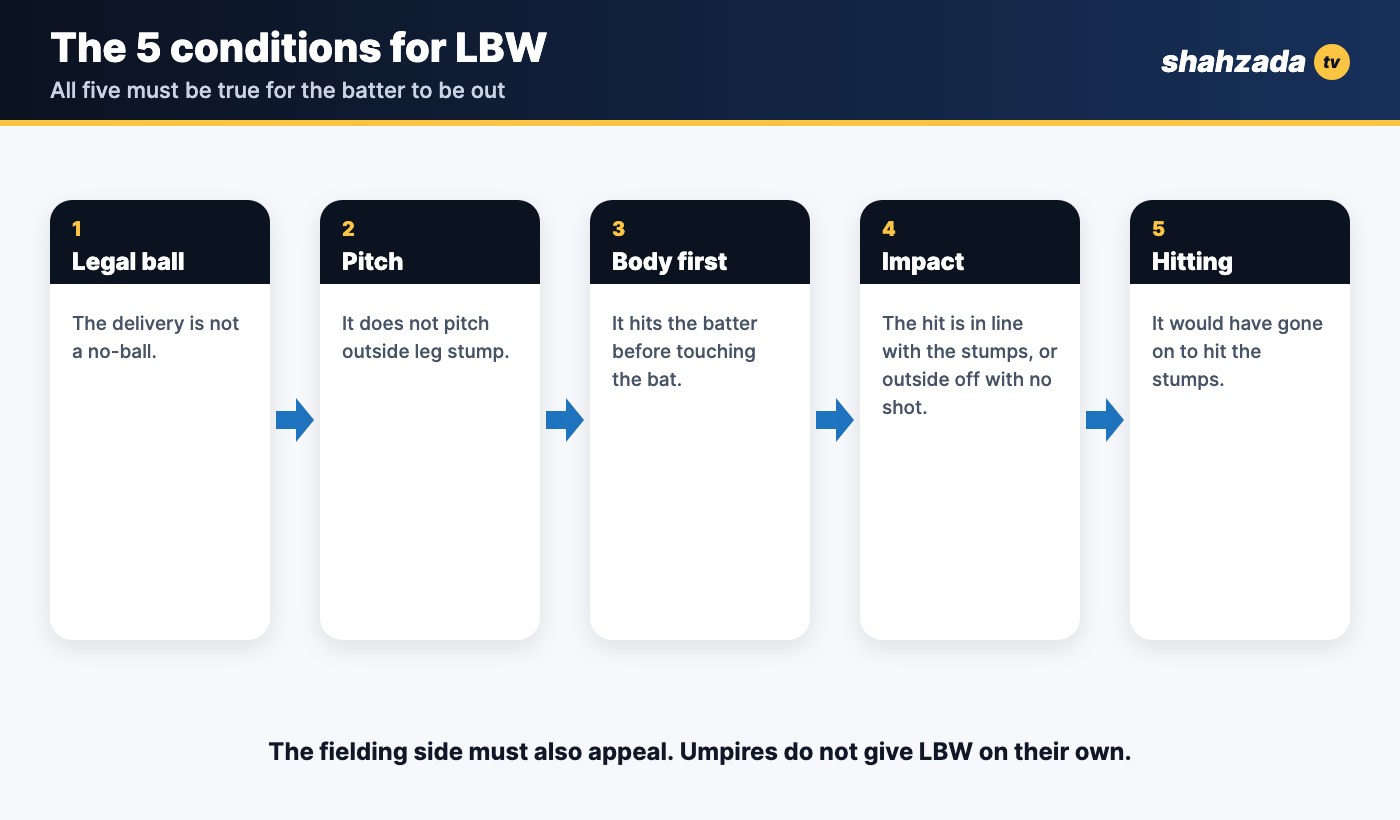
- Legal ball: the delivery is not a no-ball.
- Pitch: the ball does not pitch outside the line of leg stump.
- Body first: it hits the batter’s body or pad before touching the bat.
- Impact: the point where it hits the batter is in line with the stumps. It can also be outside off stump, but only if the batter made no genuine attempt to play the ball.
- Hitting: it would have gone on to hit the stumps.
The fielding side must also appeal. Under the Laws an umpire cannot give a batter out unless a fielder asks “How’s that?”.
Where the ball can pitch and hit
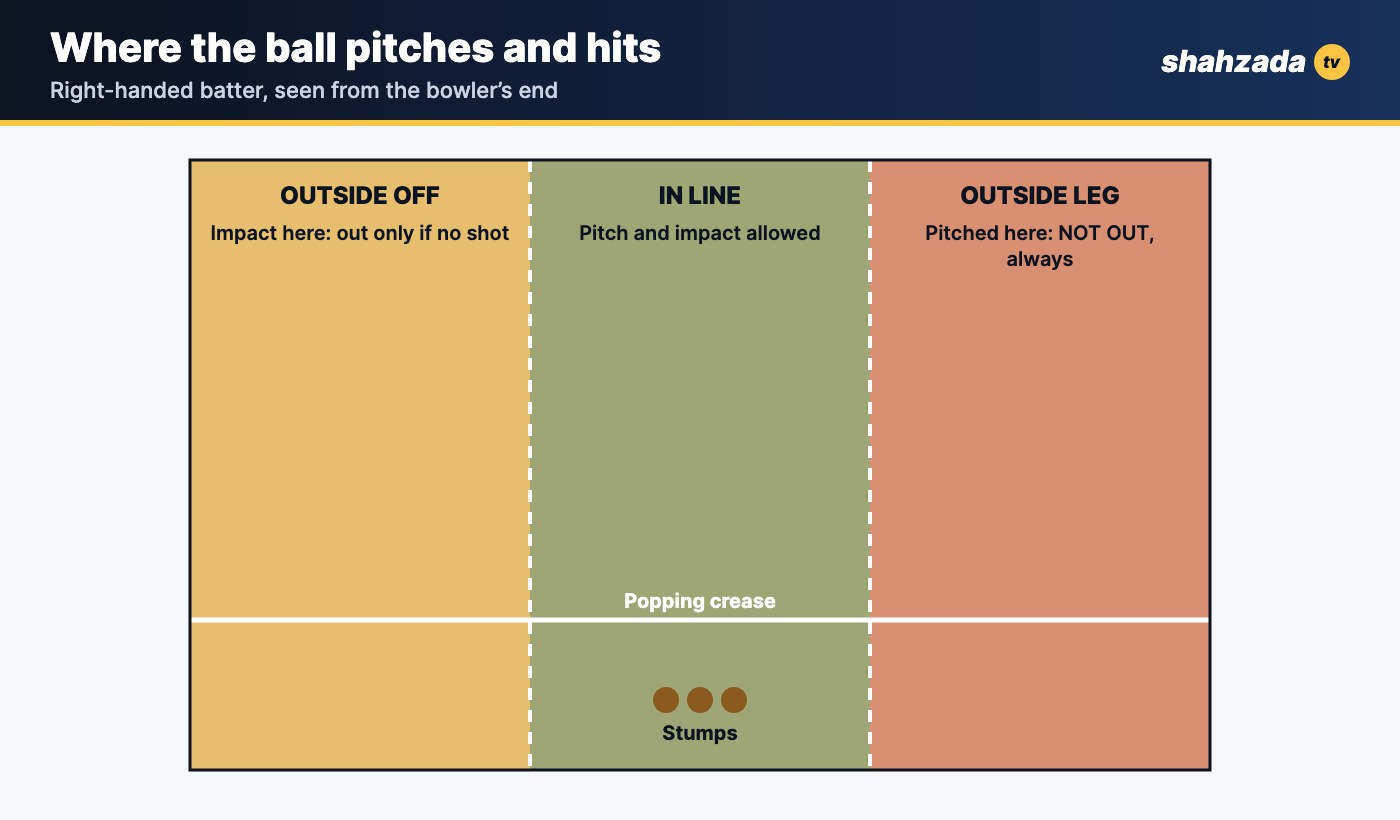
| Zone | Pitching here | Impact here |
|---|---|---|
| Outside leg stump | Never out | Never out |
| In line with the stumps | Can be out | Can be out |
| Outside off stump | Can be out | Out only if no shot was played |
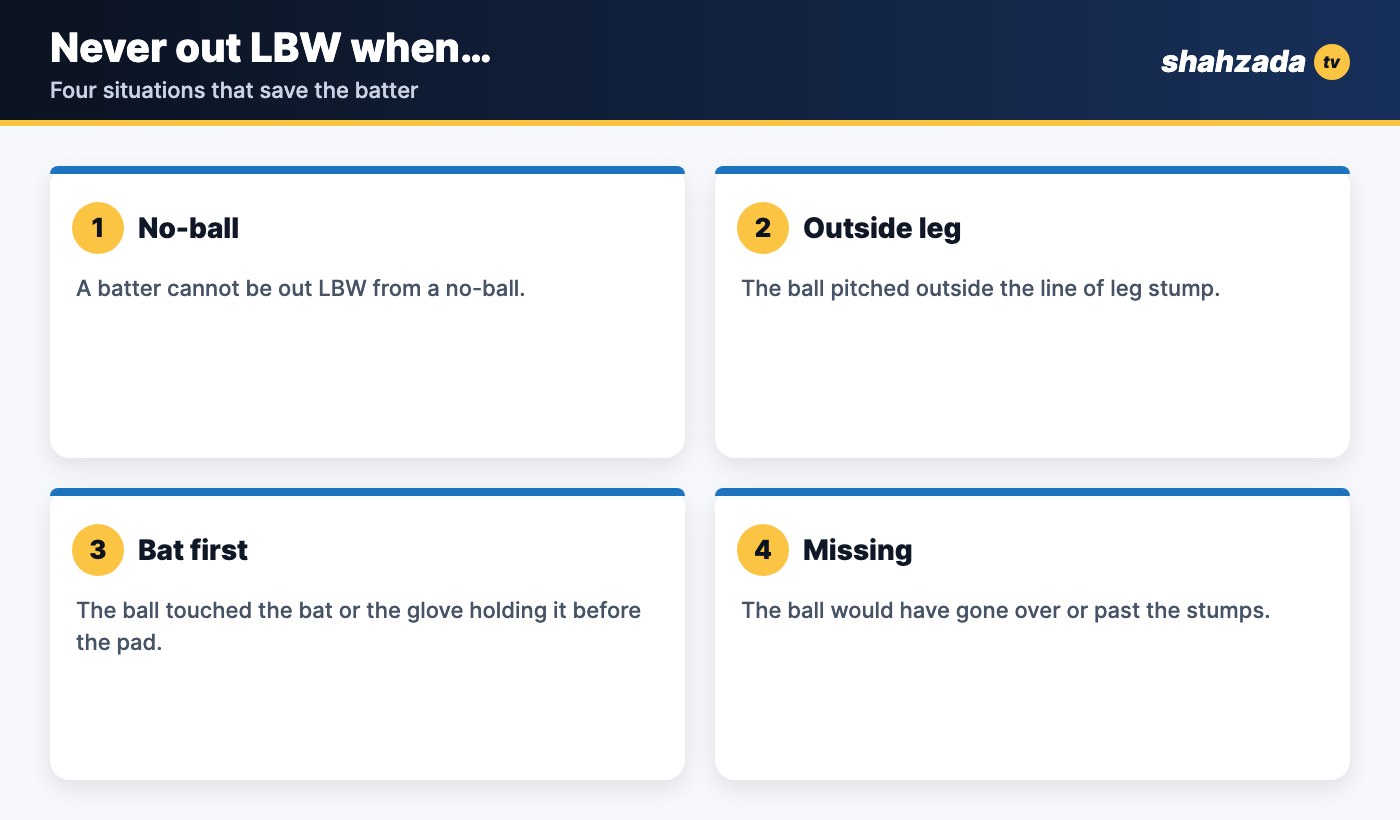
When a batter can never be out under the LBW rule
How DRS checks the LBW rule
In international cricket, teams can ask the TV umpire to review an LBW decision using the Decision Review System. Ball-tracking shows where the ball pitched, where it hit the batter and whether it would have hit the stumps. If the projection only just clips the stumps, the on-field umpire’s original decision stands. This is called “umpire’s call”.
Frequently asked questions
What does LBW stand for?
Leg before wicket. The ball does not have to hit the leg: any part of the body counts.
Can you be out LBW if the ball pitches outside leg?
No. If the ball pitches outside leg stump, the batter cannot be out LBW.
Can you be out LBW if you hit the ball first?
No. If the ball touches the bat or the glove holding the bat first, the batter is not out LBW.
Can you be out LBW to a no-ball?
No. A batter cannot be out LBW from a no-ball.
Related
Read our guide to the follow-on in Test cricket, see the top bowlers in the ICC rankings, or browse all cricket stories.
Source
The LBW rule is Law 36 of the MCC Laws of Cricket.