
The offside rule explained in simple steps: when a player is in an offside position, when it becomes an offence, the exceptions and what the referee awards.
The offside rule stops attackers from waiting next to the goalkeeper for an easy goal. It is Law 11 of football and it is simpler than it looks. This guide explains the offside rule in three checks, with a diagram and the situations where it does not apply.
What is the offside rule?
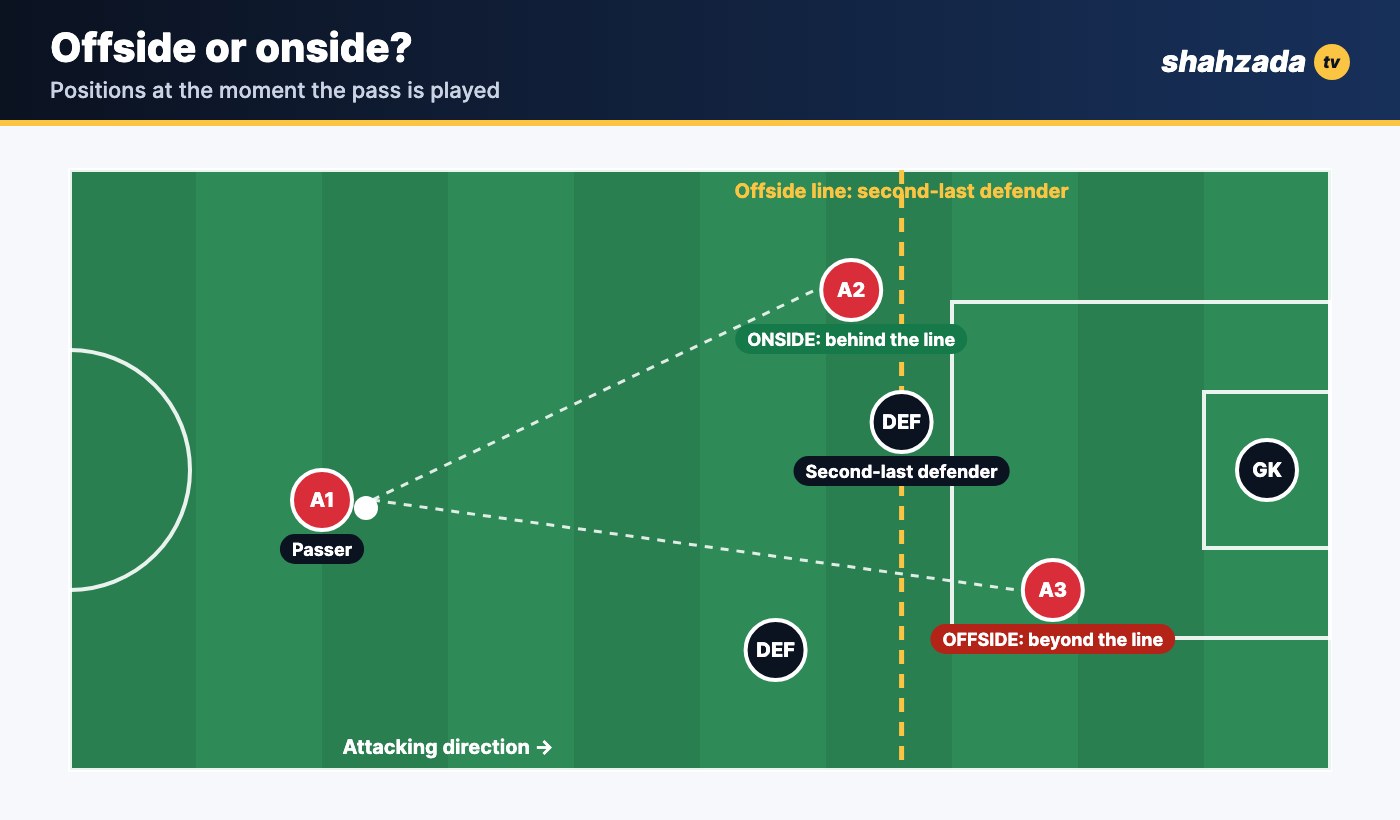
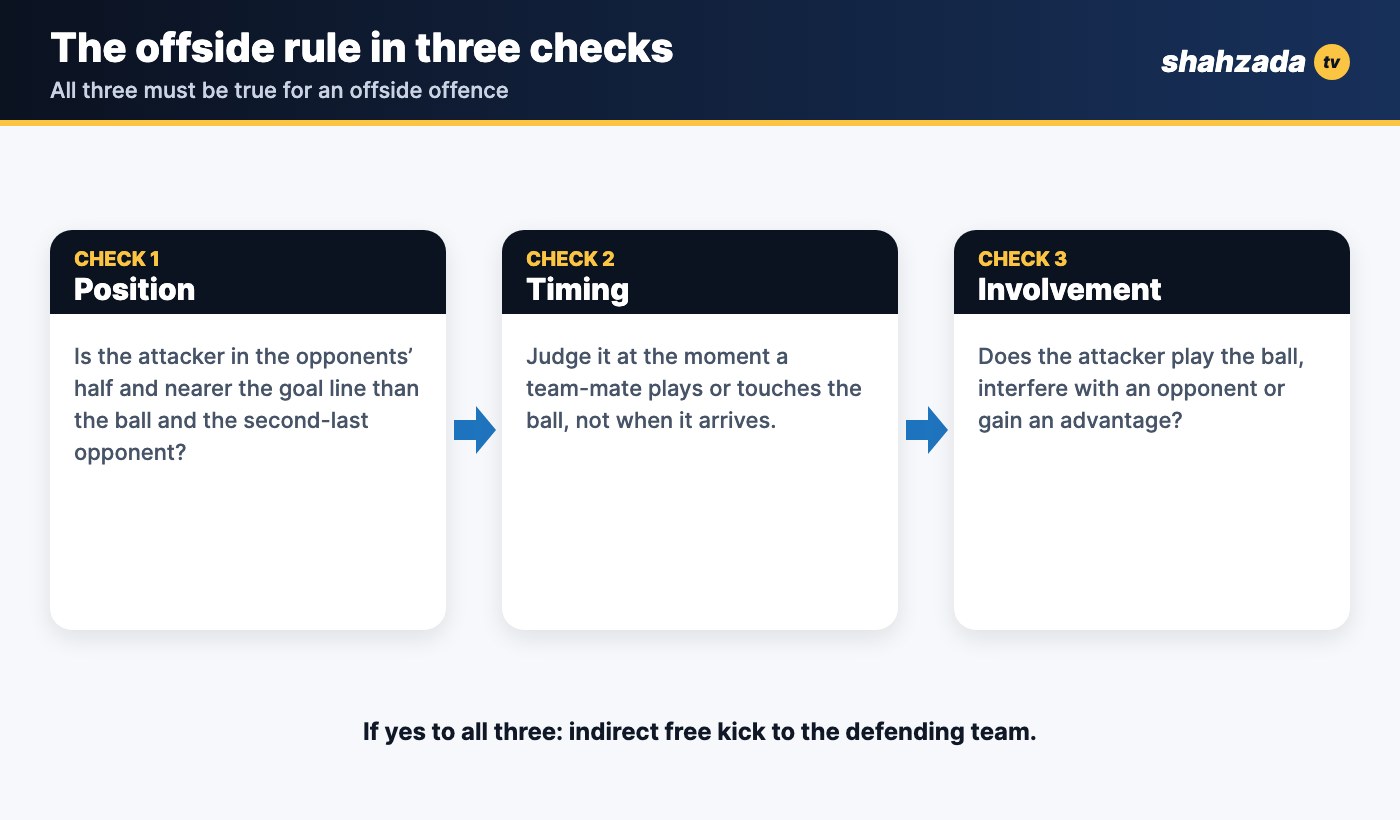
A player is in an offside position if, at the moment a team-mate plays the ball, they are:
- in the opponents’ half of the pitch, and
- nearer to the opponents’ goal line than both the ball and the second-last opponent.
The last opponent is usually the goalkeeper, so the second-last opponent is usually the deepest defender. A player who is level with that defender is onside.
Being in an offside position is not an offence
This is the part of the offside rule most people miss. Standing in an offside position is allowed. The referee only stops play if that player then becomes involved by:
- playing or touching the ball,
- interfering with an opponent, for example by blocking the goalkeeper’s view, or
- gaining an advantage, for example by scoring from a rebound off the post.
Which parts of the body count?
The head, body and feet count. The hands and arms do not, for attackers, defenders and goalkeepers alike. This is why video replays draw lines from the shoulder or the foot.
When the offside rule does not apply
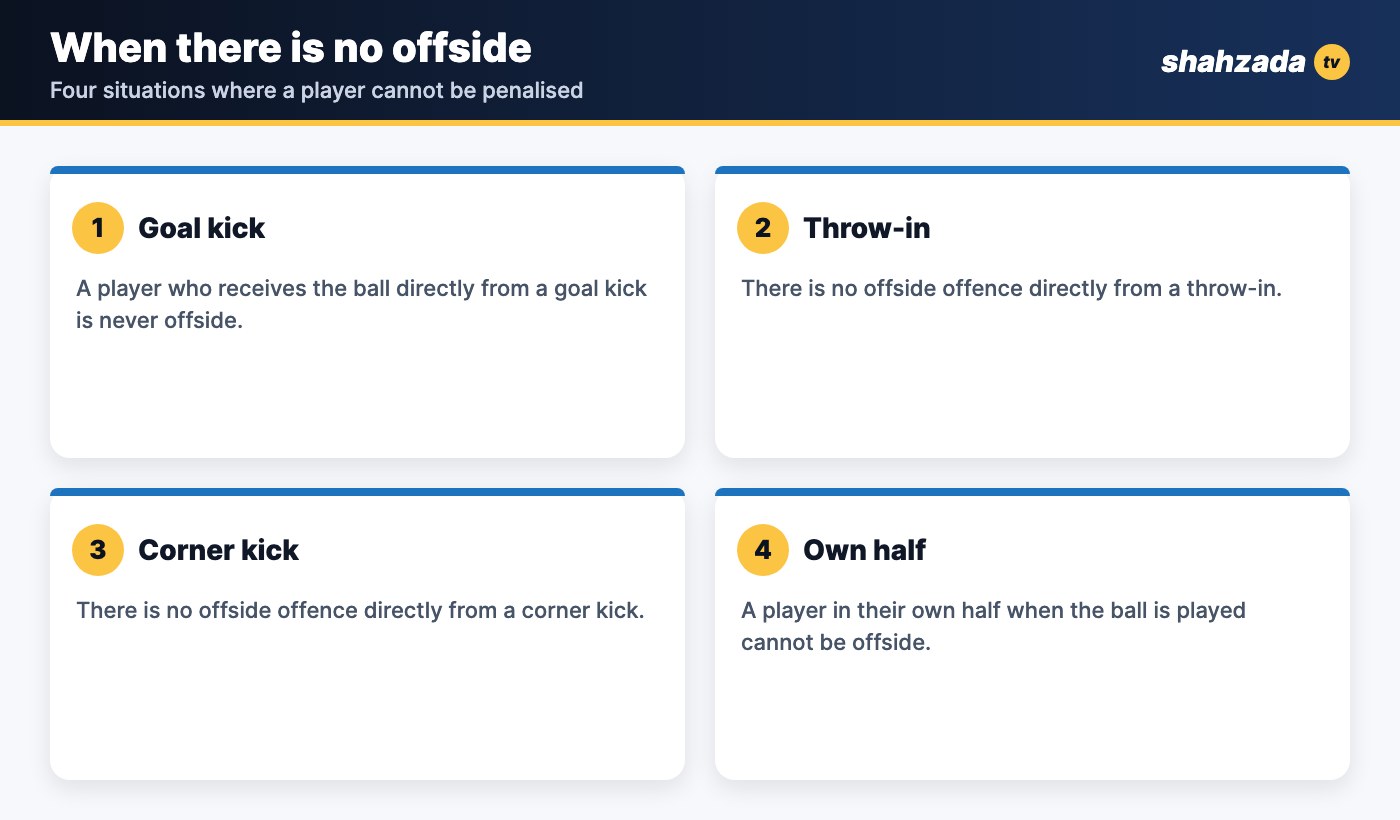
A player cannot be penalised for offside when receiving the ball directly from a goal kick, a throw-in or a corner kick. A player in their own half when the ball is played is also never offside.
What happens after an offside offence?
| Question | Answer |
|---|---|
| What does the referee award? | An indirect free kick to the defending team |
| Where is it taken? | From where the offence happened |
| Who signals it? | The assistant referee raises the flag |
| Is the player booked? | No, offside alone is not a yellow card |
A quick example
A midfielder passes forward to a striker. When the pass is played, the striker is one step behind the last defender. The striker is onside, even if they are far beyond the defender by the time the ball arrives. The offside rule is judged at the moment of the pass, not when the ball is received.
Frequently asked questions
Is level onside or offside?
Level is onside. A player level with the second-last opponent is not in an offside position.
Can you be offside from a throw-in?
No. There is no offside offence directly from a throw-in, a goal kick or a corner kick.
Can you be offside in your own half?
No. A player must be in the opponents’ half to be in an offside position.
Related
New to the game? Start with our guide to football positions, or browse all football stories.
Source
The offside rule is Law 11 in the Laws of the Game published by The IFAB.