

The volleyball serve explained: the five main types from underhand to jump serve, where you can serve from, the 8-second rule and common serving faults.
Every rally starts with a serve, and it is the only skill in volleyball that you control completely. A good volleyball serve can win points on its own or make it hard for the other team to set up an attack. This guide covers the five main types of serve and the rules every server must follow.
Five types of volleyball serve
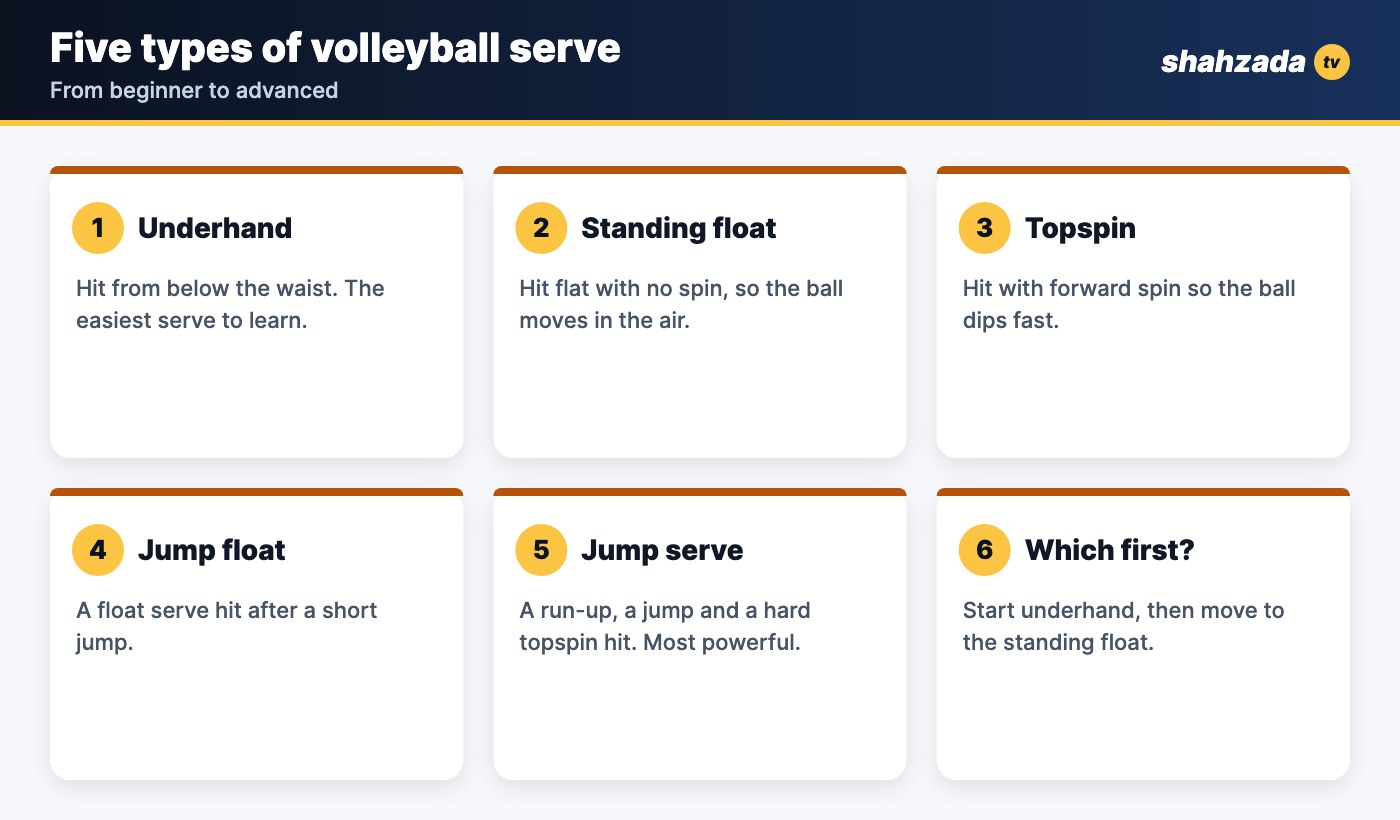
| Serve | How it is hit | Best for |
|---|---|---|
| Underhand | From below the waist with a closed fist or palm | Beginners |
| Standing float | Flat, no spin, from a standing position | Accuracy and movement |
| Topspin | With forward spin so the ball dips | Speed and power |
| Jump float | Flat hit after a short jump | Hard-to-read movement |
| Jump serve | Run-up, jump and full topspin hit | Advanced players |
How to hit a standing float serve
- Stand behind the end line, facing the target, with your non-hitting foot slightly forward.
- Toss the ball a little in front of your hitting shoulder, not too high.
- Hit the centre of the ball with a firm, flat hand.
- Stop your arm after contact, so the ball travels without spin.
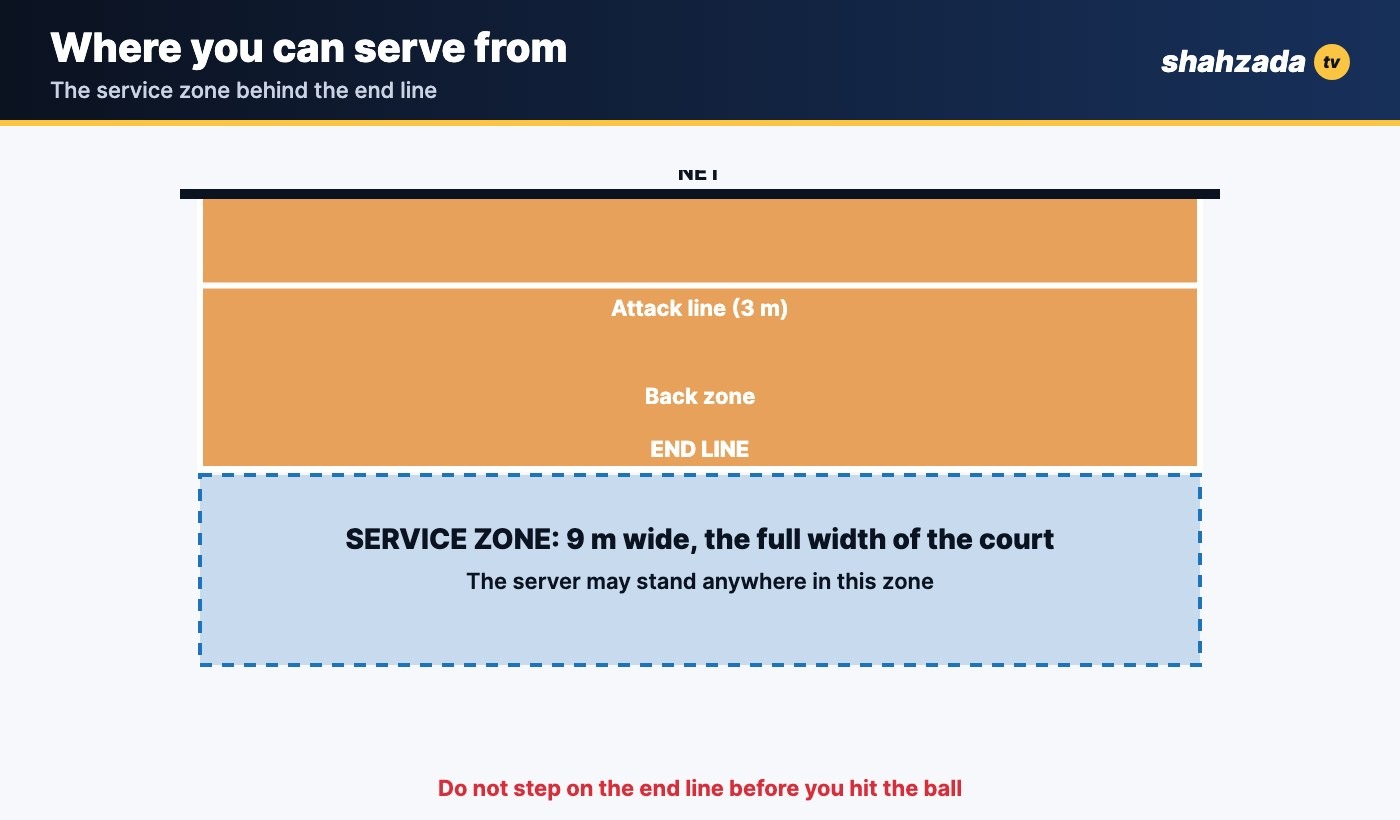
Where you can serve from
The server must stand in the service zone, which is the area behind the end line, the full 9 m width of the court.
The serving rules
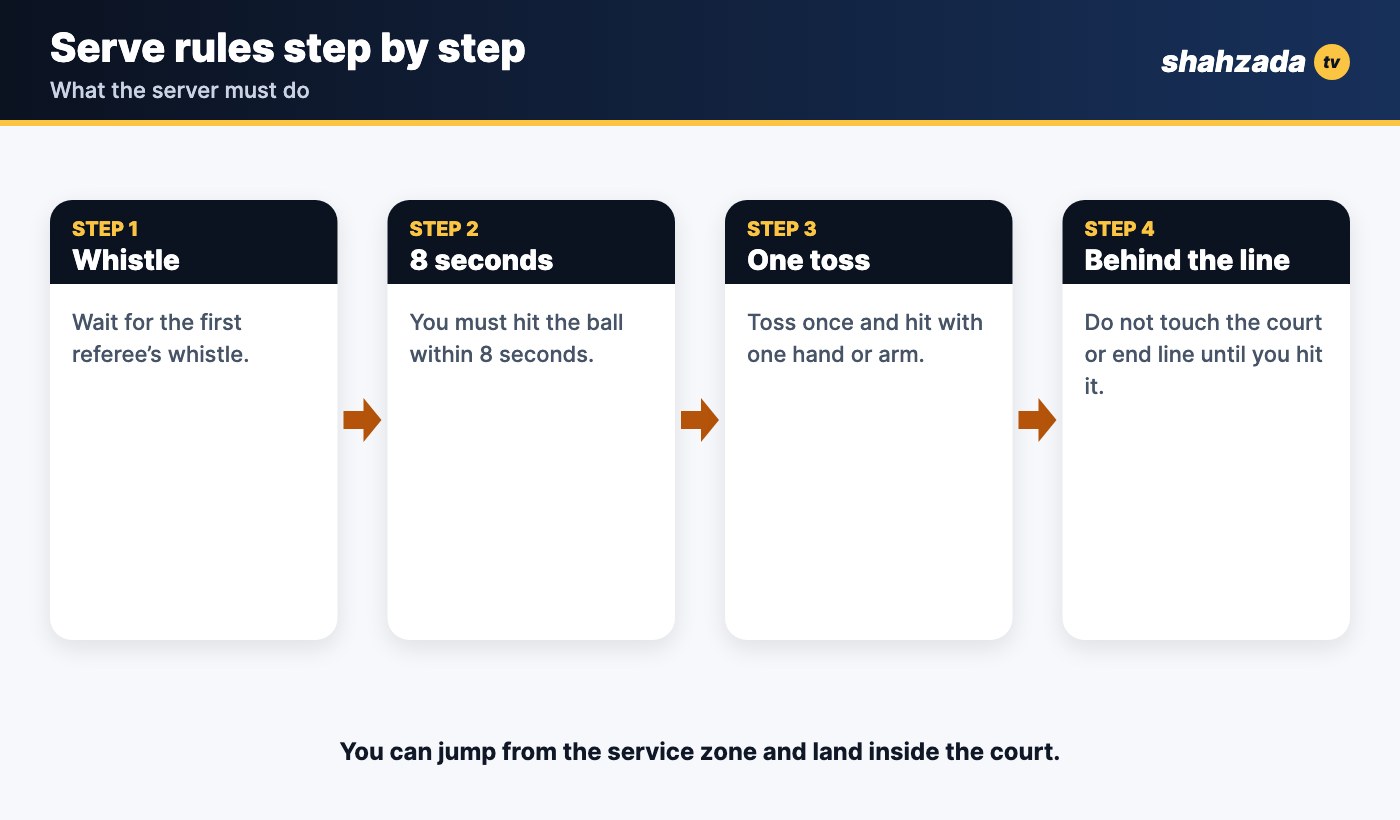
- You must hit the ball within 8 seconds of the referee’s whistle.
- You toss or release the ball once and hit it with one hand or arm.
- You must not touch the court or the end line until after you hit the ball. In a jump serve you can take off from the service zone and land inside the court.
- The ball may touch the net on the way over, as long as it crosses between the antennas.
- Team-mates must not block the receivers’ view of the server or the ball.
Common serving faults
The receiving team wins the point if the server steps on the end line, takes too long, serves into the net or out of court, or the ball passes outside the antennas.
Frequently asked questions
Which volleyball serve should a beginner learn first?
The underhand serve, then the standing float once the toss is consistent.
Can the serve touch the net?
Yes. Since 1999 a serve that touches the net and goes over is in play.
Who serves after a point?
The team that wins the rally serves. If it was the receiving team, it rotates first and a new player serves.
Related
Read our five core volleyball skills, rules for beginners and court dimensions guides, or browse all volleyball stories.
Source
Serving rules follow the official volleyball rules of the FIVB.