

Yellow and red cards explained: the main offences for a caution and a sending-off, how two yellows make a red, and what happens to a team after a red card.
Referees use yellow and red cards to punish serious offences. A yellow card is a caution. A red card sends a player off for the rest of the match. This guide explains what each card is for, how two yellows become a red and what happens to a team after a sending-off.
Yellow and red cards at a glance
What is a yellow card?
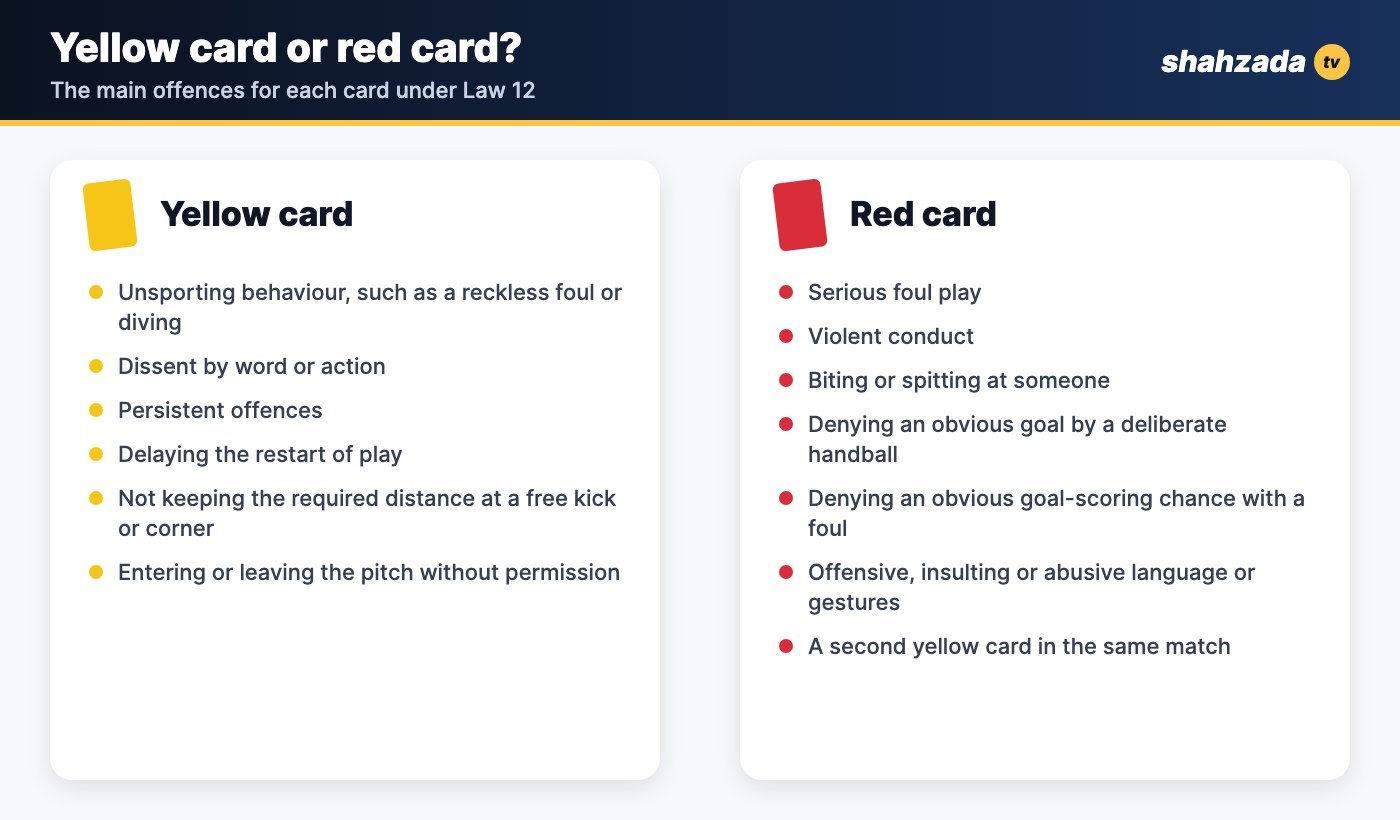
A yellow card is a caution, sometimes called a booking. The player can keep playing, but the card is recorded and a second one in the same match leads to a red card. The most common reasons are a reckless foul, dissent towards the referee and time-wasting.
What is a red card?
A red card is a sending-off. The player must leave the pitch straight away and cannot return. The usual reasons are serious foul play, violent conduct, spitting, denying an obvious goal by a handball or a foul, abusive language, and a second yellow card.
Two yellows make a red
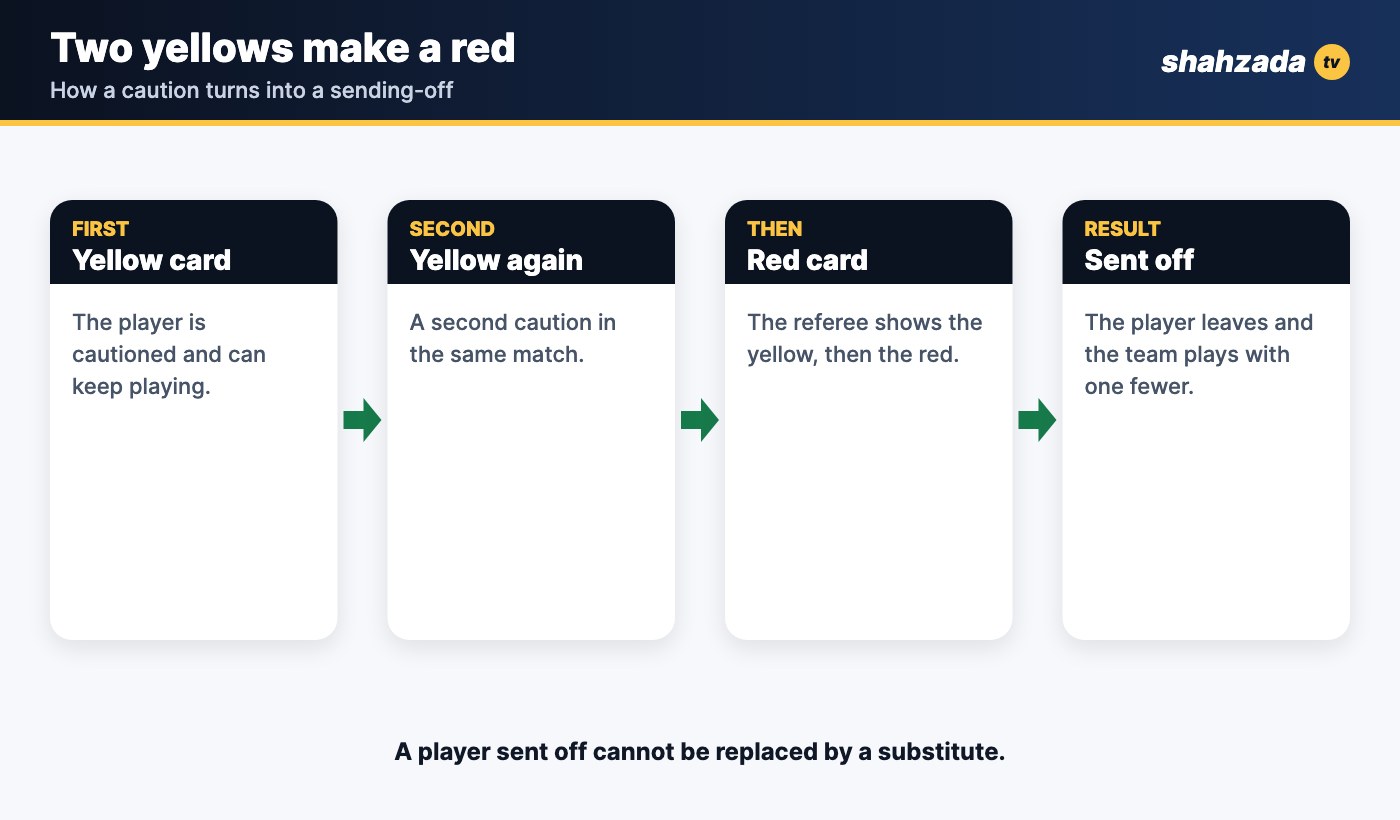
When a player gets a second caution, the referee first shows the yellow card and then the red. The result is the same as a straight red card: the player leaves the pitch and cannot be replaced.
What happens after a red card
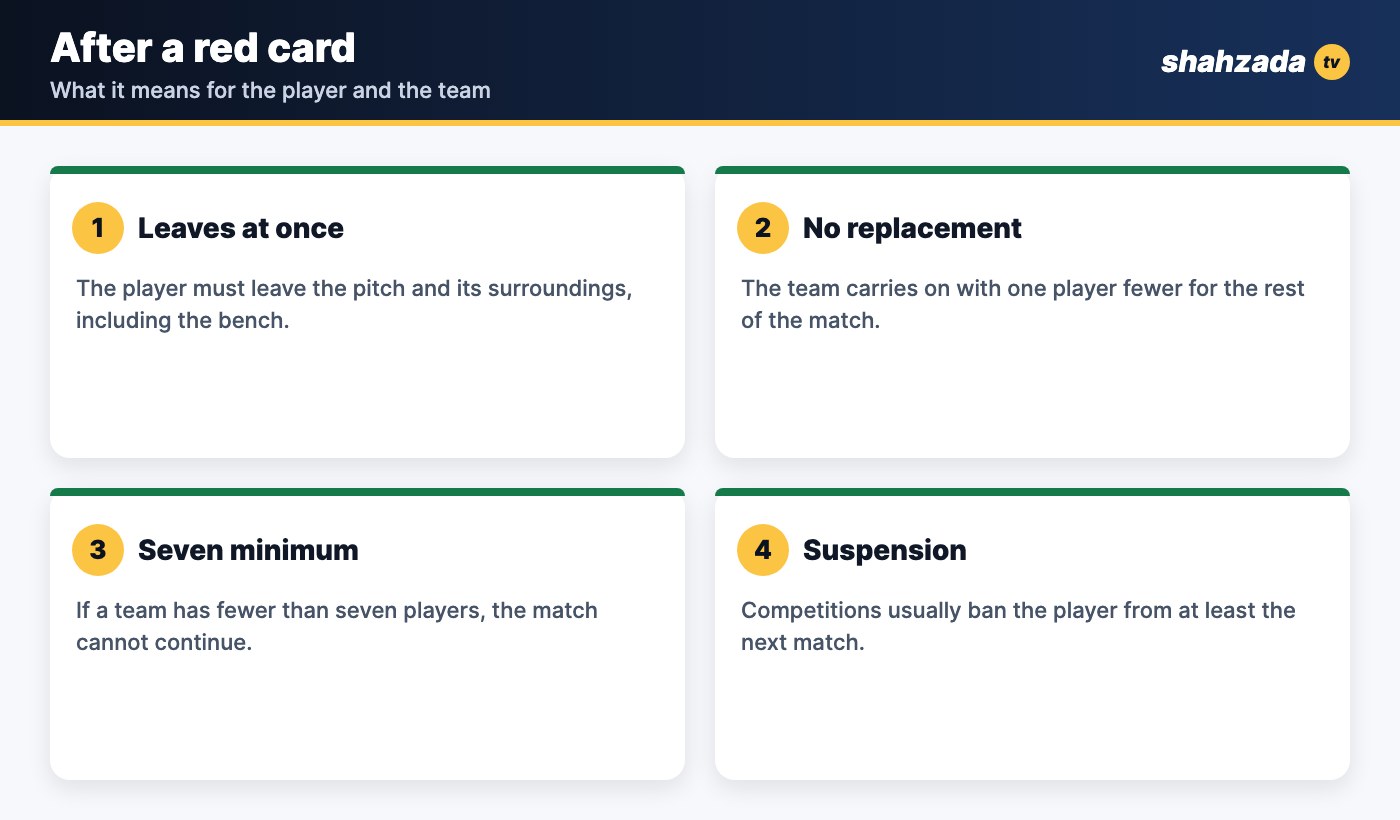
| Question | Answer |
|---|---|
| Can the player be replaced? | No. The team plays with one fewer |
| Minimum players to continue | 7 per team |
| Is the player banned? | Usually, under the rules of the competition |
| Can coaches get cards? | Yes. Team officials can be shown yellow and red cards too |
Can a player get a red card for denying a goal?
Yes, but there is an exception inside the penalty area. If a defender denies an obvious goal-scoring chance with a foul while genuinely trying to play the ball, the referee gives a penalty and a yellow card instead of a red. This avoids punishing the same incident three times with a penalty, a sending-off and a suspension. A deliberate handball that stops a goal is always a red card.
Frequently asked questions
When were yellow and red cards introduced?
They were first used at the 1970 FIFA World Cup in Mexico.
Can a substitute get a red card?
Yes. A substitute or a substituted player can be shown yellow and red cards, even on the bench.
Do yellow cards carry over to the next match?
Within a match they do not reset. Across matches, many competitions ban a player after a set number of yellow cards.
Related
Read our guides to the offside rule and penalty shootout rules, or browse all football stories.
Source
Cards are covered in Law 12 (Fouls and Misconduct) of the Laws of the Game published by The IFAB.